What Happens When You Dislocate Your Elbow?
An elbow dislocation occurs when the bones of the forearm (radius and ulna) become displaced from their normal position relative to the upper arm bone (humerus). It’s usually caused by trauma—like a fall onto an outstretched arm, a sports injury, or direct impact.
While some elbow dislocations may seem to “pop back in” or be managed in the ER, the damage beneath the surface can be severe and long-lasting if not properly treated.
At Ortho Las Vegas, we specialize in comprehensive evaluation, ligament stability restoration, and regenerative treatment options that go beyond short-term fixes—giving you the strength, confidence, and mobility to return to your life without future flare-ups.


Common Signs of Elbow Dislocation
Types of Elbow Dislocation We Treat
Why Post-ER Care Is Not Enough
Most patients receive initial treatment in the ER—but what happens next determines whether you fully recover or suffer long-term joint dysfunction.

If you’re like Pete—an active adult who wants strength and confidence back without surgery unless absolutely necessary—you need an orthopedic specialist who offers both precision diagnosis and modern treatment options.
Our Treatment Approach to Elbow Dislocations


Step 1: Advanced Diagnostics
- Physical exam and stress testing for joint laxity
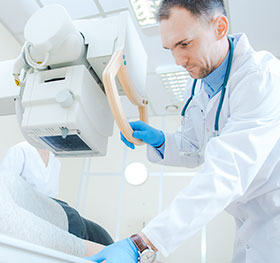
- High-resolution ultrasound and/or MRI to assess ligament, bone, and nerve status
- Comparison to the uninjured arm for baseline functional metrics

Step 2: Customized Treatment Plan
Depending on the severity and your goals, we may recommend:
Conservative & Regenerative Options:
- Image-guided PRP injections for damaged ligaments post-dislocation
- Bone Marrow Concentrate (BMC) for cases with more advanced joint involvement
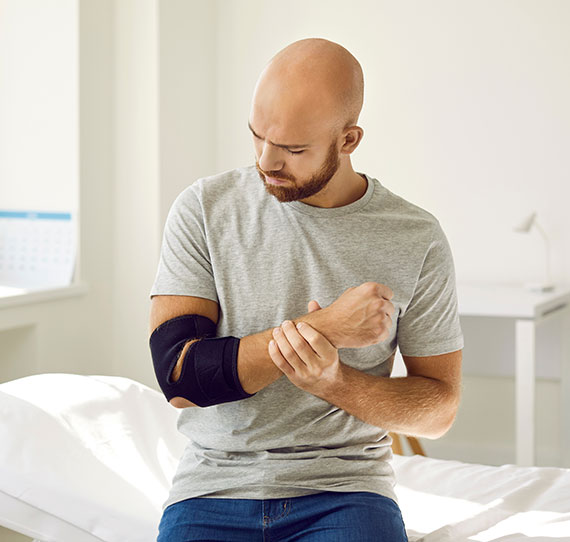
- Stabilizing bracing + structured rehab to support healing and protect range of motion
Surgical Repair (when necessary):
- Ligament reconstruction or repair for patients with chronic instability or severe damage
- Minimally invasive techniques for reduced downtime and faster recovery
- Arthroscopic debridement for patients with post-traumatic cartilage damage or stiffness

What to Expect
Here’s what your journey will look like:

1
Clear Diagnosis
We identify not just whether you dislocated your elbow—but how much damage was done and what it’s doing to your function now.

2
Integrated Treatment Plan
We walk you through every option—from bracing and PRP to surgical ligament repair—with full clarity around downtime, cost, and results.
3
Precision Treatment Execution
Every procedure is done with imaging and precision tools—no blind injections, no guesswork.

4
Performance-Driven Recovery
Whether you’re looking to return to the gym, the golf course, or your career—our rehab protocols are built to restore motion, strength, and confidence.