Broken Ankle?
Get Expert Care to Heal Fully—Without the Guesswork
A Broken Ankle Isn’t Always a Crisis—But It Does Require the Right Plan
An ankle fracture can result from a fall, twist, or direct impact. Some are obvious—with bruising, swelling, and visible deformity. Others masquerade as sprains but continue to cause pain, swelling, or instability long after the injury.
Either way, here’s the truth: ankle fractures that go untreated or mismanaged are a fast track to chronic pain, arthritis, and mobility loss. The good news? Most don’t require surgery—if handled correctly and early.
At Ortho Las Vegas, we combine surgical expertise and regenerative innovation to help patients recover faster, stronger, and with fewer complications.
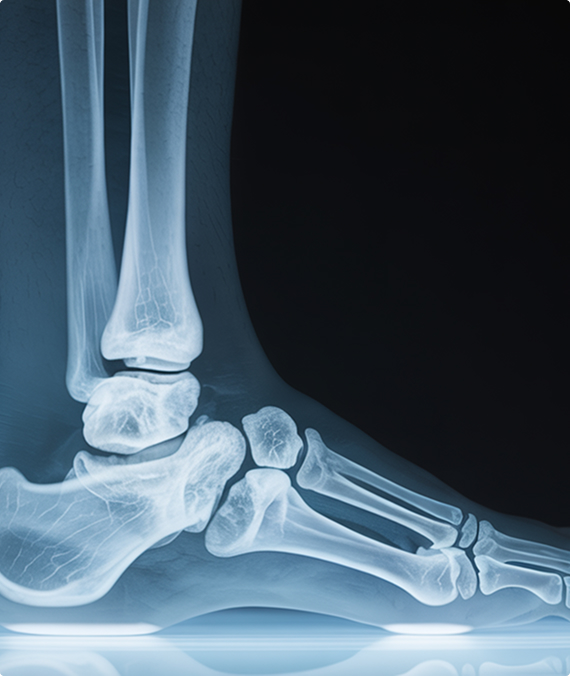

Common Signs of an Ankle Fracture (vs. a Sprain)
Many patients come to us thinking it’s “just a sprain.” But the following signs point to a possible fracture:
Whether you have a minor hairline fracture or a displaced bone fragment, it’s crucial to confirm the type and severity of the break with imaging—something many urgent care or primary clinics miss.
Types of Ankle Fractures We Treat

Treatment Options for
Ankle Fractures at Ortho Las Vegas
No two fractures—or patients—are the same. We tailor each plan to your injury, activity goals, and healing priorities.


Expert Diagnosis

Conservative Management
For non-displaced, stable fractures:
- Immobilization with boot, brace, or cast
- Weight-bearing modification plans
- Guided rehabilitation and physical therapy
- Bone support supplements and guidance

Regenerative Orthobiologics
For fractures with poor blood flow or high activity demand, we may add:
- Platelet-Rich Plasma (PRP) to stimulate healing
- Bone Marrow Concentrate (BMC) to enhance bone regeneration in delayed union cases

Non-Surgical Support
- Repetitive overuse from running, jumping, or prolonged walking
- Poor biomechanics, like flat feet or improper gait
- Low bone density from aging, hormones, or diet
- Sudden increase in intensity or volume of physical activity
- Previous injuries that altered your movement patterns

Surgical Repair (When Needed)
For displaced or unstable fractures, we perform:
- Open reduction and internal fixation (ORIF)
- Minimally invasive procedures when appropriate
- Post-op biologics to reduce inflammation and improve recovery
- Full post-surgical rehab and reintegration support
Our goal is always to avoid surgery unless it’s truly the best option for long-term function and durability.

Are You a Candidate for Ankle Fracture Treatment at Ortho Las Vegas?
If you’re in pain, still limping, or unsure of the next step—we can help you find clarity and a clear path forward.
Why Patients
Trust Ortho Las Vegas


How Long Does It Take
to Heal a Broken Ankle?
| Fracture Type | Typical Recovery | Treatment Plan |
|---|---|---|
| Minor, stable fracture | 4–6 weeks | Immobilization + rehab |
| Non-displaced fracture | 6–8 weeks | Bracing + functional recovery |
| Displaced fracture (surgery) | 10–12 weeks+ | Surgical repair + physical therapy |
| Delayed union or revision | 12+ weeks | Biologics + custom recovery |