Numbness or Tingling in Your Ring and Pinky Fingers?
If your elbow pain is accompanied by numbness, tingling, or weakness in your hand—especially your ring and pinky fingers—you might be dealing with Cubital Tunnel Syndrome, a condition caused by compression of the ulnar nerve as it passes through a narrow space inside your elbow.
This isn’t just an “annoying nerve thing.” Left untreated, cubital tunnel syndrome can lead to permanent nerve damage, reduced grip strength, and long-term hand dysfunction.
At Ortho Las Vegas, we combine advanced diagnostics, targeted orthobiologic treatments, and if necessary, minimally invasive surgery to resolve ulnar nerve entrapment—quickly, safely, and effectively.


What Is Cubital Tunnel Syndrome?
Cubital Tunnel Syndrome occurs when the ulnar nerve becomes compressed or irritated at the inner part of the elbow (the “funny bone” area). This nerve controls sensation and motor function to part of the hand, particularly:
This condition is especially common in:
Common Symptoms of Cubital Tunnel Syndrome
If you’ve been told it’s carpal tunnel—but your thumb is fine—it’s probably cubital, not carpal.

Why Early Treatment Matters
Cubital Tunnel Syndrome can progress from mild irritation to permanent nerve damage if ignored.

Many people rely on braces, painkillers, or temporary therapy. But these don’t solve the root issue: nerve compression. Our goal is to decompress the nerve, restore normal function, and protect long-term hand strength and sensation.
How We Treat Cubital Tunnel
Syndrome at Ortho Las Vegas
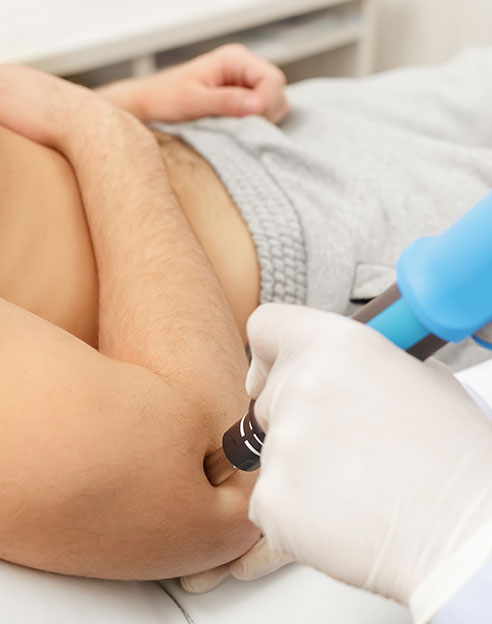

Non-Surgical Treatment for Early-Stage Cases
- Custom bracing (especially nighttime extension splints)
- Activity modification (eliminating prolonged elbow flexion or pressure)
- Targeted physical therapy to reduce compression
- Ultrasound-guided PRP or hydrodissection to reduce inflammation and release the nerve gently
These approaches work best when symptoms are caught early.

Orthobiologic Nerve Hydrodissection
Hydrodissection has shown promising results for nerve entrapment syndromes with minimal downtime and high safety.

Minimally Invasive Cubital Tunnel Release Surgery
In more advanced or long-standing cases, surgical decompression or ulnar nerve transposition may be necessary. Dr. McGee specializes in minimally invasive techniques that:
- Decompress the nerve
- Reposition it to reduce future compression
- Minimize scarring and recovery time
- Restore sensation and function safely

What to Expect From Our Process
Here’s what your journey will look like:

1
Thorough Evaluation & Imaging
Includes orthopedic exam, nerve conduction studies, and dynamic ultrasound to pinpoint the compression site.

2
Tailored Treatment Plan
You’ll receive a clear breakdown of conservative options (bracing, PRP, hydrodissection) and surgical considerations if needed.
3
Precision Treatment Execution
Every procedure is done with image guidance. No guesswork.

4
Post-Treatment Support
Rehab protocols, hand therapy, and progress tracking are built in to ensure full functional return.