Bone-on-Bone Solutions: How PRP in Las Vegas Could Extend the Life of Your Joint
“I was told knee replacement is my only option.” If you’ve heard these words from a doctor after being diagnosed with bone-on-bone knee arthritis, you’re not alone. Many Las Vegas residents with advanced knee arthritis feel they’re facing an inevitable choice between living with pain or undergoing major surgery.
But what if there was another path worth exploring?
What “Bone-on-Bone” Really Means
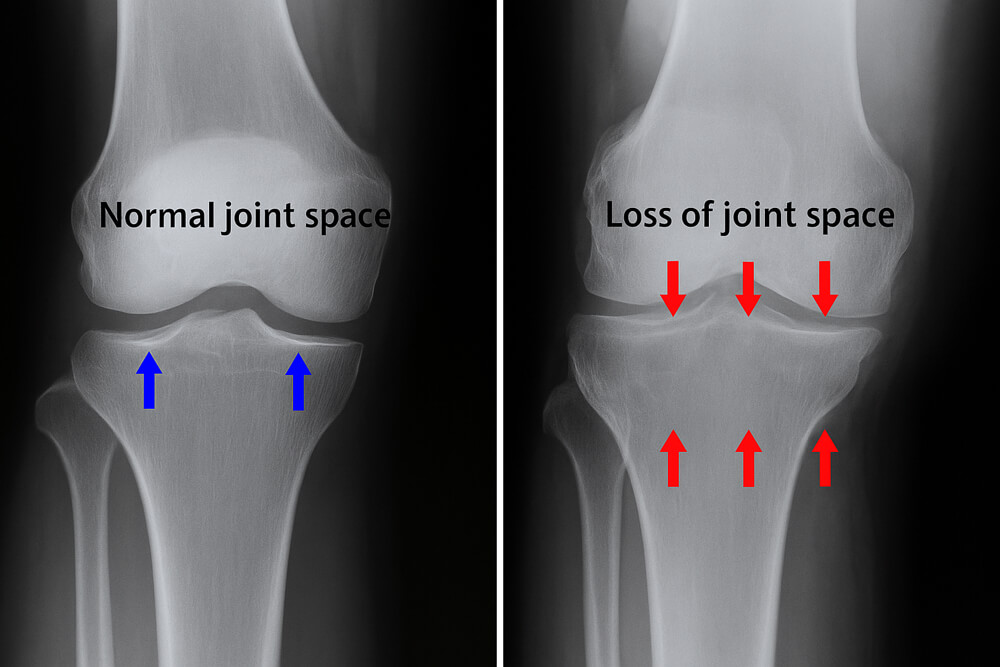
When doctors describe your knee as “bone-on-bone,” they’re telling you that the protective cartilage cushioning your joint has significantly worn down. This cartilage normally acts like a shock absorber between the bones, allowing smooth, pain-free movement. When it deteriorates, your bones can literally rub against each other during movement, causing inflammation, pain, and that characteristic grinding sensation many patients describe.
Think of it like driving a car where the shock absorbers are completely worn out – every bump in the road is felt dramatically, and the ride becomes increasingly uncomfortable and potentially damaging.
Considering Your Treatment Options
When managing bone-on-bone knee arthritis, multiple treatment approaches may be considered:
Conservative Approaches:
- Physical therapy: Strengthens supporting muscles and improves function
- Bracing: Provides support and may improve alignment
- Weight management: Reduces load on the joint
- Anti-inflammatory medications: Provide temporary symptom relief
Injection Options:
- Cortisone: Provides quick, short-term pain relief (2-4 weeks), though repeated use may have diminishing returns
- Hyaluronic acid: Acts as a joint lubricant, typically lasting 3-6 months
- Platelet-Rich Plasma or Stem Cell Therapy: May modulate inflammation and support your own body’s natural tissue healing processes
Surgical Options:
- Arthroscopic procedures: Limited benefit for advanced arthritis
- Partial knee replacement: For arthritis limited to one compartment
- Total knee replacement: The definitive treatment for end-stage arthritis
Our team of orthopedic specialists can help determine which approach (surgical or regenerative medicine options) best suits your specific condition, lifestyle needs, and goals.
If you’re dealing with bone-on-bone pain, you know that over-the-counter pain medications only mask symptoms temporarily. Cortisone shots may provide short-term pain relief, but repeated use can have diminishing returns and may be less ideal for long-term joint health. And while staying active is important, the pain often makes movement difficult.

Why Patients Seek Alternatives to Knee Replacement
Even with advanced arthritis, many patients have compelling reasons to postpone surgery:
- Recovery concerns: A full knee replacement typically requires weeks of limited mobility and months of rehabilitation
- Lifestyle disruption: Surgery means pressing pause on work, hobbies, and family responsibilities
- Desire to stay active: Many Las Vegas residents want to maintain their current lifestyle without a lengthy surgical interruption
- Concerns about artificial joints: Some worry about the lifespan of prosthetic joints or potential complications
What Is PRP Therapy?
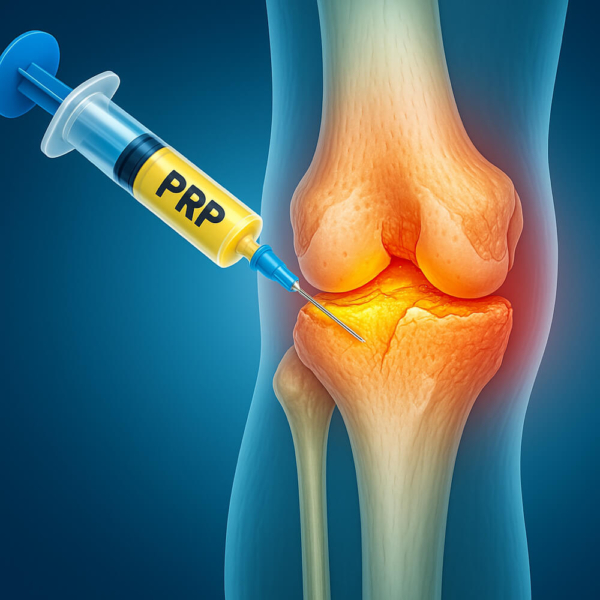
Platelet-Rich Plasma (PRP) therapy represents a biological approach to managing knee arthritis. Rather than simply masking symptoms or replacing the joint entirely, PRP works with your body’s natural healing mechanisms.
Here’s how it works:
- A small sample of your blood is drawn (similar to a routine blood test)
- The blood is processed in a centrifuge to concentrate the platelets
- This concentrated solution is then precisely injected into your knee joint
What makes platelets special is that they contain powerful growth factors and signaling proteins that help regulate inflammation and support tissue healing. When concentrated and delivered directly to your damaged knee joint, these platelets release these healing factors where they’re needed most.
In fact, at Ortho Las Vegas, we regularly use PRP in conjunction with surgical interventions as a way to potentially optimize patient outcomes and support your body’s natural healing process.
Why PRP Shows Promise for Bone-on-Bone Conditions
While no non-surgical treatment can reverse severe arthritis completely, research suggests PRP may help in several important ways:
- Reduces inflammation: PRP can help calm the inflammatory response that causes much of the pain in arthritic joints
- Improves function: Many patients report improved mobility and ability to perform daily activities
- Provides pain relief: Studies show significant pain reduction in many patients with knee arthritis
- Potentially slows progression: Some research suggests PRP may help slow cartilage breakdown, though more long-term studies are needed
We explain it this way at our office: “Think of PRP not as a way to regrow cartilage, but as a way to create a healthier environment in the joint. By reducing inflammation and supporting the remaining tissues, many patients experience meaningful improvement even with advanced arthritis.”
What Research Shows About PRP for Severe Knee Arthritis
Multiple clinical studies have examined the effects of PRP on knee arthritis:
- A 2021 systematic review published in the Journal of Pain Research found that PRP injections provided significant pain reduction and functional improvement for patients with knee osteoarthritis (1)
- Many patients report meaningful pain relief that can last months to years.
- Evidence suggests that a series of injections often produces better results than a single treatment
It’s important to set realistic expectations: PRP isn’t a permanent “cure” for arthritis. Rather, it’s a management strategy that may help extend the life of your natural joint and delay the need for more invasive procedures.
Who Makes a Good Candidate for PRP in Las Vegas?
PRP therapy may be worth considering if you:
- Have moderate to severe knee arthritis but want to stay active
- Are looking to delay knee replacement surgery
- Have tried conventional treatments like cortisone injections or pain medications with limited success
- Are willing to participate in a comprehensive treatment approach
- Don’t have active infections or certain blood disorders
- Have realistic expectations about outcomes
The ideal candidate understands that PRP is part of a broader strategy for joint health that might include weight management, appropriate exercise, and other supportive measures.
Is PRP Right For You? Key Factors To Consider
While many patients with knee arthritis may benefit from PRP, certain factors can help predict treatment success:
Favorable factors that may predict better response:
- Mild to moderate arthritis (some joint space remaining on X-rays)
- Age under 65
- Active lifestyle with good muscle strength
- No significant knee malalignment
- Realistic expectations about outcomes
Signs that PRP may not be your best option:
- Complete loss of joint space with extensive bone spurs
- Significant knee instability or malalignment
- Multiple previous knee surgeries
- Expectations of complete pain elimination
Measuring Success: A successful PRP treatment typically results in:
- Reduction in pain levels
- Improved ability to perform daily activities
- Reduced reliance on pain medications
- Increased activity tolerance
- Meaningful relief, though results vary.
During your consultation, we’ll thoroughly evaluate your condition and discuss whether PRP aligns with your specific needs and goals.
The PRP Procedure at Ortho Las Vegas: What to Expect
If you’re considering PRP therapy for bone-on-bone knee arthritis, here’s what you can expect at Ortho Las Vegas:
Step 1: Comprehensive Consultation
Your journey begins with a thorough evaluation with Dr. McGee, who will:
- Review your medical history and previous treatments
- Perform a physical examination of your knee
- Review relevant imaging (X-rays, MRI if available)
- Discuss whether PRP is appropriate for your specific condition
- Answer all your questions about the procedure and expected outcomes
Step 2: The PRP Procedure
The procedure itself is straightforward and performed right in our office:
- A small amount of blood is drawn from your arm
- The blood is processed in a specialized centrifuge to concentrate the platelets
- The area around your knee is cleaned and numbed
- Using precision guidance, the PRP is injected into the specific areas of your knee joint
- The entire process typically takes less than an hour
Step 3: Recovery and After-Care
One of the advantages of PRP therapy is the minimal downtime:
- Most patients can return to regular daily activities within 24-48 hours
- We recommend avoiding strenuous exercise for a short period
- Some patients experience mild soreness that resolves quickly
- A customized plan for appropriate activity and joint protection will be provided
Step 4: Follow-Up and Monitoring
Your treatment doesn’t end with the injection:
- Follow-up appointments allow us to monitor your progress
- Additional treatments may be recommended based on your response
- Complementary strategies for joint health will be discussed
- Long-term planning for your knee health continues
Is PRP Right for Your Bone-on-Bone Knee Pain?
If you’re dealing with advanced knee arthritis and want to explore options beyond pain medication or immediate surgery, PRP therapy may be worth considering. It’s important to have a detailed conversation with a qualified orthopedic specialist who can assess your specific condition and help determine if PRP is appropriate for you.
PRP represents a low-risk biological approach that has helped many Las Vegas-area patients improve their quality of life and stay active despite significant arthritis. While it can’t “cure” bone-on-bone arthritis, it offers a meaningful option in the spectrum between basic pain management and joint replacement surgery.
Understanding PRP Risks and Limitations
Like any medical procedure, PRP therapy has potential risks and limitations to consider:
Potential Side Effects:
- Post-injection soreness or pain (common, typically resolves in 2-3 days)
- Temporary inflammation or swelling
- Small risk of infection (less than 1%)
- Rare allergic reactions
Important Limitations:
- Results vary significantly between patients
- Multiple injections may be needed for optimal results
- Not all patients experience significant improvement
- Advanced bone-on-bone arthritis may see more modest benefits
Patients with certain blood disorders, active infections, or cancer should not undergo PRP therapy. Always discuss your complete medical history with your physician before proceeding.
Financial Considerations
PRP therapy is generally not covered by many insurance companies for bone on bone knee arthritis treatment:
- Most insurance plans, including Medicare, do not currently cover PRP for knee arthritis
- Treatment protocols may involve 1-3 injections; some patients repeat as needed
- Some flexible spending accounts (FSAs) or health savings accounts (HSAs) may be used
- Our office can provide detailed cost information and payment options during your consultation
If you’re ready to explore whether PRP could help manage your knee arthritis, schedule a consultation at Ortho Las Vegas today. Dr. McGee and our team will take the time to understand your unique situation and help you determine the best path forward for your joint health.
About the Author
Dr. Roddy McGee is a fellowship-trained orthopedic surgeon specializing in sports medicine and joint preservation. As a Las Vegas native and former college athlete, he brings both local understanding and sports experience to his orthobiologic treatments. After completing his medical training and prestigious sports medicine fellowship at the American Sports Medicine Institute, Dr. McGee now serves as team physician for several athletic programs including College of Southern Nevada and Bishop Gorman High School.
He is dedicated to providing advanced joint preservation options for patients seeking alternatives between conservative care and surgery. Dr. McGee combines his expertise in both surgical and non-surgical approaches to deliver personalized care for patients with knee arthritis and other joint conditions.
“Bone-on-bone” describes advanced joint arthritis where cartilage has worn down so the bones rub. Many people searching for a “PRP doctor” in Las Vegas are looking for hair or facial treatments. Ortho Las Vegas focuses on orthopedic PRP—using your own platelets to support joints, tendons, and ligaments when arthritis or injury is the problem, not skin or hair.
PRP will not regrow a full layer of cartilage or cure end-stage arthritis. For the right candidate, it may reduce inflammation, ease pain, and help you stay active while you explore whether surgery can wait. Orthopedic PRP and related orthobiologics are offered by providers whose live bios support regenerative care (see FAQ). Costs, candidacy, and whether PRP, protein concentrate, BMAC, or a different path fits you are discussed up front.
Ortho Las Vegas
6190 S. Fort Apache Rd., Las Vegas, NV 89148
(702) 485-5885 · ortholasvegas.com
Serving patients from Las Vegas, Henderson, Summerlin, Boulder City, Mountains Edge, Mesquite, and nearby communities.
Related pages
- Bone-on-bone / PRP page (this page)
- PRP overview — includes protein concentrate
- PRP for knee osteoarthritis
- BMAC / bone marrow concentrate
- Orthobiologics & regenerative medicine
- Knee care
- Joint replacement / Jiffy Knee — when replacement is the clearer next step
- Dr. Roddy McGee · Dr. Justin Limtong
Orthopedic PRP FAQ — Joint Pain in Las Vegas (Not Cosmetic or Hair)
What is orthopedic PRP?
Orthopedic platelet-rich plasma (PRP) is a concentrated preparation of platelets taken from a sample of your own blood. At Ortho Las Vegas, blood is drawn in the office, spun in a centrifuge to concentrate the platelets, and then injected—often with imaging guidance such as ultrasound—into a diagnosed joint, tendon, or ligament target. Platelets release growth factors that help regulate inflammation and support the body’s healing response. PRP here is used for musculoskeletal problems (for example knee osteoarthritis, tendon injuries, and related joint or elbow pain), not for cosmetic skin or hair goals.
How is orthopedic PRP different from cosmetic or hair PRP?
The preparation idea—concentrating your own platelets—is similar, but the medical goal, the anatomy treated, and the training of the clinician are different. Cosmetic or hair PRP is typically aimed at facial rejuvenation or scalp follicles. Orthopedic PRP at Ortho Las Vegas is aimed at joints, tendons, and ligaments, after an orthopedic or sports medicine exam and imaging review. Searching “best PRP doctor Las Vegas” often surfaces dermatology, med-spa, or hair clinics. If your pain is bone-on-bone arthritis, a sports injury, shoulder or hip pain, or elbow tendonitis, look for an orthopedic evaluation—not a facial or hair package. Ortho Las Vegas does not offer cosmetic or hair PRP on this page’s pathway.
What does “bone-on-bone” mean?
When a doctor says a knee (or another joint) is “bone-on-bone,” the protective cartilage that normally cushions the joint has worn down significantly. Bones can rub during movement, which often causes inflammation, pain, and a grinding sensation. It is a picture of how worn the joint is on imaging—not by itself a single treatment plan. Options may include physical therapy, bracing, medications, cortisone or hyaluronic acid injections, orthopedic PRP or other orthobiologics when appropriate, or joint replacement when arthritis is end-stage and conservative care is no longer enough.
Who is a good candidate for orthopedic PRP for knee, hip, shoulder, or elbow problems?
PRP is commonly discussed for mild to moderate osteoarthritis and for some tendon or ligament problems, when exam and imaging match the pain source. Favorable signs discussed on the live bone-on-bone page include some joint space remaining, an active lifestyle with reasonable muscle strength, and realistic expectations. The practice’s PRP hub also describes common uses for knee osteoarthritis, rotator cuff and shoulder pain, elbow tendonitis (such as tennis or golfer’s elbow), and hip, ankle, or chronic sports injuries.
PRP may be less appropriate when there is complete loss of joint space with extensive bone spurs, major deformity or instability, infection, certain blood disorders, or when the main problem is elsewhere (for example nerve pain misattributed to the joint). Knee, hip, shoulder, and elbow problems are evaluated the same way: diagnosis first, then a candid recommendation. Results vary; improvement is not guaranteed.
Who should not get PRP?
People with active infections, certain blood disorders, or cancer should not undergo PRP, per the live bone-on-bone page. Sudden severe symptoms—inability to bear weight, visible deformity, a locked knee, fever, or major swelling after trauma—need prompt evaluation, not a self-selected injection from a web page. Your full medication list and health history matter; the consultation is where those filters are applied.
Will PRP regrow my cartilage or reverse bone-on-bone arthritis?
No. Ortho Las Vegas does not present PRP as a cure or as cartilage regrowth. The practice frames it as creating a healthier joint environment—reducing inflammation and supporting remaining tissues—so many patients can feel better and stay more active. Advanced bone-on-bone arthritis may see more modest benefit; when arthritis is end-stage, replacement may be the more definitive option.
How does PRP compare with a cortisone shot?
Cortisone often gives quick, short-term pain relief (the live page notes roughly 2–4 weeks for many patients), but repeated use can have diminishing returns and may be less ideal for long-term joint health when used over and over. Hyaluronic acid acts more like a joint lubricant and often lasts on the order of months. PRP is a biological approach aimed at modulating inflammation and supporting healing rather than only masking symptoms. Which injection (if any) fits you depends on your diagnosis, prior response, and goals—not a one-size protocol.
What is protein concentrate, and how is it different from PRP?
In addition to traditional PRP, Ortho Las Vegas may recommend a protein concentrate (sometimes called plasma concentrate). Per the PRP hub, this is a more refined preparation created by filtering and processing the leftover plasma after PRP is prepared. It may be discussed for patients recovering from surgery or injury, or for more advanced degenerative conditions when a denser mix of growth factors is appropriate. Not everyone needs protein concentrate; if it fits your case, the team explains why before you decide.
What is BMAC, and how is it different from PRP?
BMAC (bone marrow aspirate concentrate) is another orthobiologic option described on Ortho Las Vegas’s orthobiologics and BMAC pages. It uses cells concentrated from your own bone marrow to support tissue repair. PRP concentrates platelets from a blood draw; BMAC involves a bone marrow aspiration. Neither is right for every joint or every stage of arthritis. If you are a candidate for orthobiologics, the team explains PRP, protein concentrate, bone marrow concentrate, and related options—including limits—before you decide.
Does insurance cover PRP? What does it cost?
Most insurance plans, including Medicare, do not currently cover PRP for knee arthritis. Orthobiologics are generally treated as non-covered / cash-pay services. Some patients use an FSA or HSA. Ortho Las Vegas discusses expected costs, payment options, and whether PRP is even appropriate before you commit—no package pressure from a web page. No public dollar range is listed here; costs are reviewed in consultation.
How many PRP treatments will I need, and what results can I expect?
Some patients do well with one injection; others are advised to consider a series (the live pages commonly reference about 1–3 treatments depending on response). The procedure is typically done in the office in under an hour. Mild soreness or swelling for a couple of days is common; many people return to regular daily activity within about 24–48 hours, with strenuous exercise limited briefly per your plan. Imaging-guided placement (usually ultrasound; X-ray when appropriate) is part of the PRP hub’s described technique.
Improvement is not guaranteed for every patient; candidacy and expectations are reviewed in consultation. Individual results vary.
Who provides orthopedic PRP at Ortho Las Vegas, and how do I book?
Live care-team bios support orthobiologic / regenerative options with:
- Dr. Roddy McGee, DO — board-certified orthopedic surgeon with sports medicine fellowship training; bio lists regenerative medicine options including BMAC and PRP, plus joint replacement when needed.
- Dr. Justin Limtong, DO — fellowship-trained adult hip and knee reconstruction surgeon; bio specialties list Platelet-Rich Plasma (PRP) Therapy and Stem Cell Treatment alongside advanced non-operative care and joint replacement.
To book, call (702) 485-5885 or use the appointment request options on ortholasvegas.com. An appointment request is not a treatment recommendation—your exam, imaging, and goals guide the plan.
Hours (live site): Mon–Thu 8 a.m.–5 p.m.; Fri 8 a.m.–2 p.m.
Address: 6190 S. Fort Apache Rd., Las Vegas, NV 89148.
Sources
- “Intra-Articular Platelet-Rich Plasma Injections in Knee Osteoarthritis: A Review of Their Current Molecular Mechanisms of Action and Their Degree of Efficacy” https://pmc.ncbi.nlm.nih.gov/articles/PMC8836227/#:~:text=Another%20review%20of%20the%20literature,12%20months%20following%20PRP%20injection.
- “Are multiple platelet-rich plasma injections useful for treatment of chronic patellar tendinopathy in athletes? a prospective study” https://pubmed.ncbi.nlm.nih.gov/24519184/