Shoulder care in Las Vegas
Get a clear answer for your shoulder pain.
PRP uses a concentration of your own platelets to support the body’s healing response. Start with an orthopedic evaluation to learn whether it fits your rotator cuff injury—or whether another path makes more sense.
An appointment request is not a treatment recommendation. Your diagnosis, imaging, goals, and exam guide the plan.
When the shoulder keeps getting in the way
Could PRP help your shoulder pain?
Shoulder pain can come from the rotator cuff, bursa, joint, or a combination. PRP may be worth discussing for certain tendon problems and partial tears—but the first job is finding the source.
New injury with marked weakness? Sudden inability to lift the arm, visible deformity, numbness, or severe pain after trauma should be evaluated promptly rather than treated from a landing page.
Night pain is disrupting sleep
Rolling onto the shoulder or finding a comfortable position has become difficult.
Reaching overhead hurts
Lifting, throwing, serving, pressing, or getting dressed triggers pain.
Rehab has stalled
You have tried rest, activity changes, or physical therapy and still feel limited.
You want to understand your options
You are weighing PRP, injections, continued rehab, or repair and want a diagnosis-led recommendation.
A measured, in-office process
From diagnosis to a precise treatment plan
Evaluate the shoulder
Your history, strength, motion, and prior imaging help identify whether the problem is tendon, bursa, joint, or something else.
Prepare your platelets
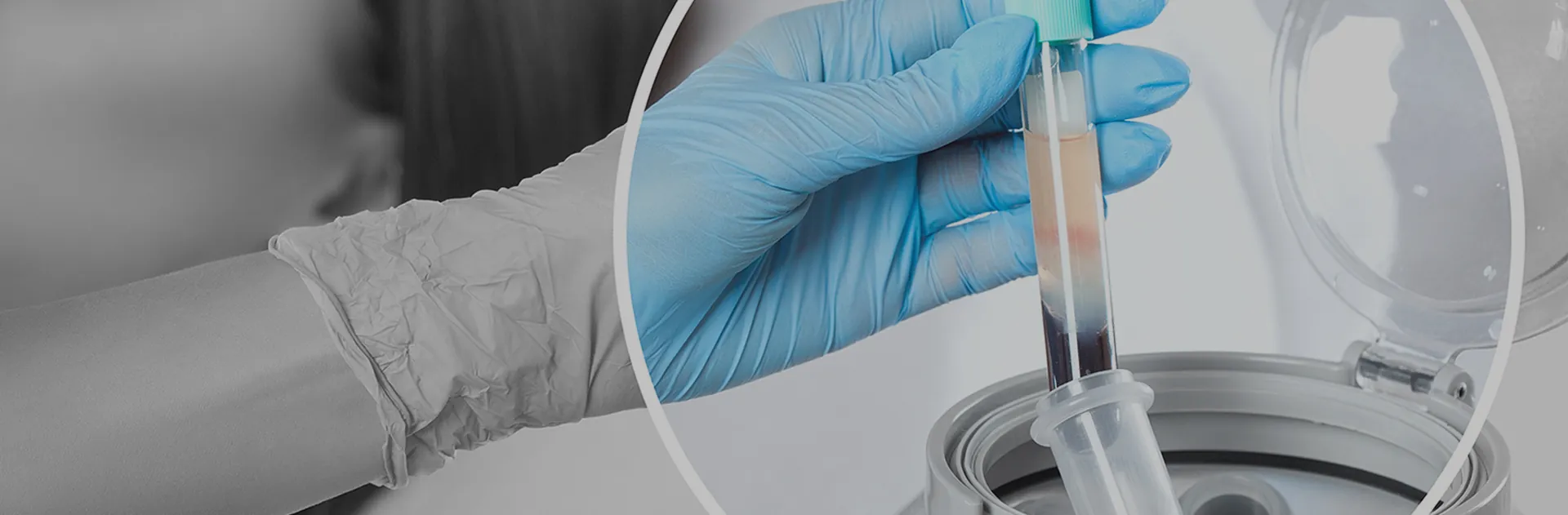
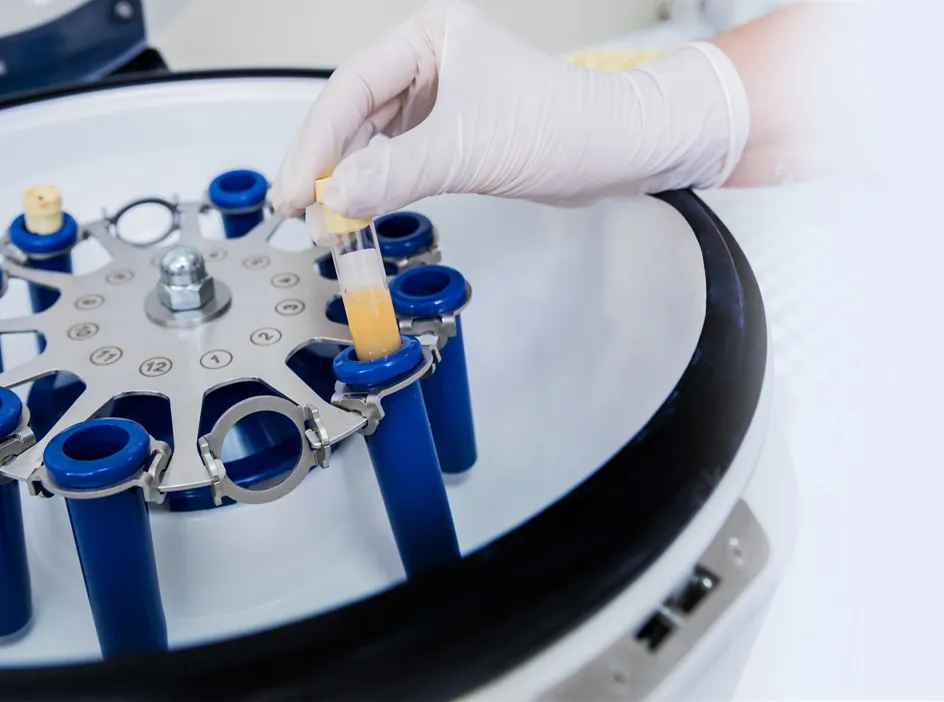
If PRP is appropriate, blood is drawn and processed in a centrifuge to concentrate the platelet-containing portion.
Guide the injection
Ultrasound is usually used to place the preparation at the intended shoulder tendon or joint target.
Build the recovery plan
Expect temporary soreness. Your clinician will map out activity changes, follow-up, and rehabilitation based on the procedure and diagnosis.
The right question is not “Does PRP work?” It’s “Does PRP fit this shoulder?”
Results vary, and evidence is not the same for every diagnosis. A candid recommendation should include when PRP is reasonable—and when it is not enough.
PRP may be worth discussing when
- Your symptoms and exam point to rotator cuff tendinopathy, a strain, or certain partial tears.
- Conservative care has not restored the function you need.
- You understand that improvement is not guaranteed and usually unfolds over time.
Another path may be better when
- A full-thickness tear, fracture, instability, or nerve problem needs a different treatment plan.
- The main pain source is advanced joint arthritis or another structure.
- Your health history, medications, or current condition makes an injection inappropriate.

15,000 patients treated · >5,000 shoulder surgeries · >1,000 shoulder surgeries prevented
Meet Dr. Roddy McGee, DO
Dr. McGee is an orthopedic surgeon with subspecialty fellowship training in sports medicine. He treats shoulder injuries with both operative and nonoperative options, including PRP and other orthobiologics.
That range matters: the goal is not to fit every shoulder into one procedure. It is to match the treatment to the diagnosis, the tissue, and the life you want to get back to.
Request an appointmentStraight answers before you book
PRP questions, answered
Your consultation is where these answers become specific to your shoulder.
What exactly is PRP?
Platelet-rich plasma is made from a sample of your own blood. The sample is spun in a centrifuge to separate and concentrate the platelet-containing portion, which is then placed at a diagnosed treatment target.
Can PRP repair a torn rotator cuff?
It should not be presented as a guaranteed “tear repair.” PRP may be considered for certain tendon problems and partial tears, while larger or full-thickness tears may need a different plan. Exam findings and imaging help make that distinction.
How long does recovery take?
Temporary soreness for a few days is common. Return to lifting, sport, and overhead activity depends on the injection target, the underlying diagnosis, and your rehabilitation plan. Your clinician will give you condition-specific guidance.
How many injections will I need?
Some patients receive one injection; others may be advised to consider a series. The recommendation depends on the diagnosis, response, and treatment goals—not a fixed package.
Does insurance cover PRP?
PRP is rarely covered by insurance. The office can discuss current pricing and available payment or financing options before treatment.
Do I need an MRI first?
Not always. Prior records and imaging are useful, but the need for an X-ray, ultrasound, or MRI depends on your history and exam. Bring any reports or image discs you already have.
More about PRP and shoulder care
Ready to find out what your shoulder needs?
Request an evaluation with Ortho Las Vegas. The team will review your symptoms, confirm the diagnosis, and walk you through PRP, rehab, injection, and surgical options when appropriate.
Ortho Las Vegas · Sports Medicine & Orthopedics
6190 S Fort Apache Rd, Las Vegas, NV 89148
Mon–Thu 8 a.m.–5 p.m. · Fri 8 a.m.–2 p.m.
Information on this page is educational and does not replace medical advice.