Orthobiologics in Las Vegas
Shoulder Stem Cell (BMAC) Therapy in Las Vegas
How bone marrow concentrate may have the potential to help a rotator cuff, a labrum, or an arthritic shoulder, and what is still unknown.
An appointment request is not a treatment recommendation. Your diagnosis, imaging, goals, and exam guide the plan.
Shoulder stem cell (BMAC) therapy in Las Vegas: could it help your shoulder?
Searching for “shoulder stem cell therapy” in Las Vegas brings up many different offers. This page explains one of them in plain language: bone marrow aspirate concentrate, or BMAC, made from a small sample of your own bone marrow. It covers how BMAC may have the potential to help some painful shoulders, which shoulder problems it is discussed for, who may and may not be a candidate, what the research shows so far, and what a visit involves.
The most important thing to know up front: no stem cell product is FDA-approved to treat shoulder pain, rotator cuff tears, shoulder arthritis, or any other orthopedic condition. At Ortho Las Vegas, BMAC is prepared from a sample of your own bone marrow during the same procedure visit and is handled within FDA rules for same-surgical-procedure autologous tissue. The products we use are FDA-allowed. We do not use birth-tissue products such as amniotic, placental, or umbilical preparations, or Wharton’s jelly. Research is ongoing, results vary, and BMAC may not help every shoulder. An appointment request is not a treatment recommendation. Your exam, imaging, and goals guide the plan.
Ortho Las Vegas is an orthopedic and sports medicine practice at 6190 S. Fort Apache Rd., Las Vegas, NV 89148. To ask about an evaluation, call (702) 485-5885.
What does “stem cell therapy” mean for the shoulder?
It can mean several different things, which is why the label is easy to misunderstand.
- BMAC (bone marrow aspirate concentrate) uses a sample of your own bone marrow, usually taken from the back of the pelvis. The sample is concentrated and placed at a diagnosed target in or around the shoulder. It contains a mix of cells, platelets, and growth factors. It is not a single manufactured stem cell drug.
- PRP (platelet-rich plasma) is made from a sample of your own blood. It concentrates platelets and plasma proteins. It is often grouped with regenerative treatments, but it is not a stem cell product. See PRP for rotator cuff and shoulder pain.
- Fat-derived (adipose) products are processed from a patient’s own fat. They have a different source and a different preparation than BMAC.
- Donor products, such as amniotic, placental, or umbilical preparations, come from someone else. They raise different sourcing, safety, and regulatory questions than a sample of your own marrow. Ortho Las Vegas does not use birth-tissue products such as amniotic, placental, or umbilical preparations, or Wharton’s jelly. The products we use are FDA-allowed, prepared from your own tissue.
This page is about BMAC from your own marrow.
How BMAC may have the potential to help a shoulder
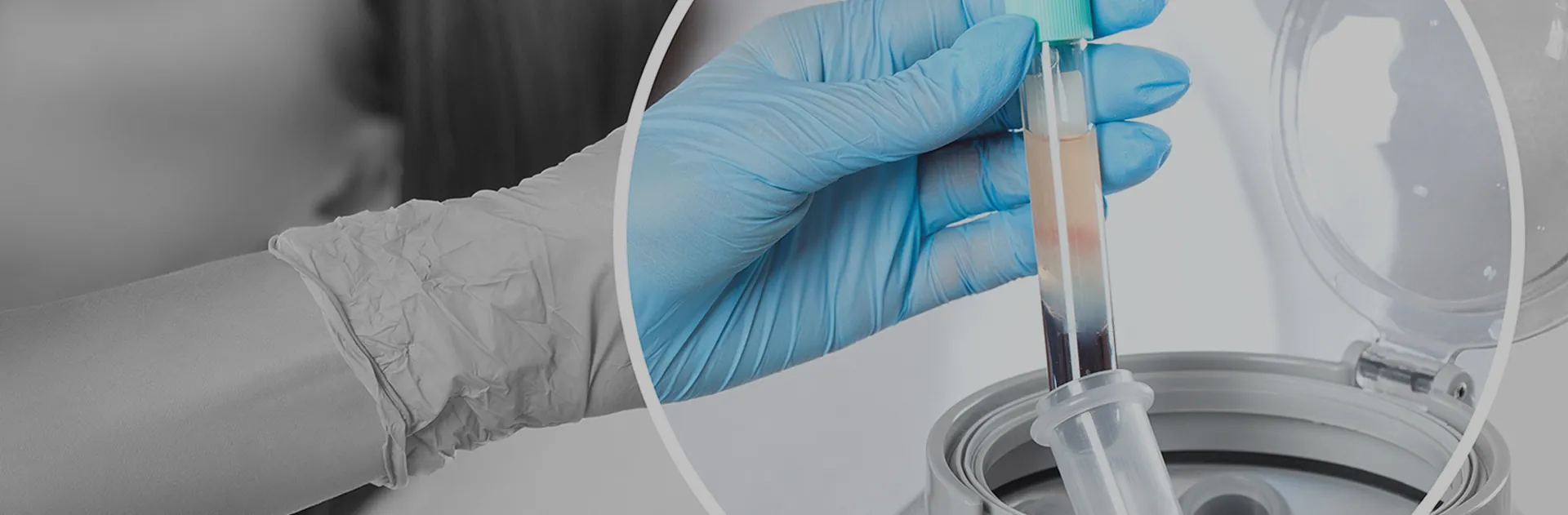
Bone marrow contains a mix of cells, platelets, and signaling proteins. In a BMAC procedure, a sample is drawn, spun in a centrifuge to concentrate those components, and placed with ultrasound guidance at a target your physician has identified.
Researchers are studying whether these components may influence the environment around an injured tendon, a worn joint surface, or other tissue, for example by affecting inflammation or supporting the body’s own repair processes. That is a hypothesis under study, not an established result. Studies differ in design and quality, preparations vary from study to study, and it is not yet known which patients may benefit or by how much. Some patients report less pain or better function after orthobiologic treatment, and others notice little or no change.
Shoulder problems where BMAC may be discussed
Partial-thickness rotator cuff tears and tendon wear
In a partial tear or tendinopathy, the tendon is thinned, frayed, or irritated but not torn all the way through. After activity changes, therapy, and other measures, some patients and physicians discuss orthobiologic injections such as PRP or BMAC. The research is preliminary, and results vary.
Full-thickness rotator cuff tears
A full-thickness tear goes all the way through the tendon and can leave a gap. Research has not shown that an injection alone closes that gap. Some people with a full-thickness tear manage with therapy and activity changes. Others talk with a surgeon about repair, and BMAC has been studied as an add-on to surgical repair, with preliminary findings. We explain the options and trade-offs without steering you toward any one of them.
Shoulder arthritis
For some people with shoulder osteoarthritis, BMAC may be part of a conversation about pain and function. Research in the shoulder is limited, and BMAC has not been shown to regrow cartilage or reverse arthritis. Whether it is a fit is decided at the visit, after your exam and imaging.
Labral problems
A labral tear is a structural injury, and an injection is not a substitute for repair when repair is needed. Ortho Las Vegas offers BMAC for selected labral problems. PRP or BMAC may be discussed for pain from wear around the labrum or as part of a broader plan. Research is limited, and results vary.
Other shoulder conditions
Ortho Las Vegas offers BMAC for selected frozen-shoulder problems. Biceps tendon irritation, bursitis, and impingement usually start with other approaches, and whether BMAC is worth discussing is decided case by case after an exam.
BMAC and PRP for the shoulder: how they differ
| PRP | BMAC | |
|---|---|---|
| Where it comes from | A blood draw from your arm | A bone marrow sample, usually from the back of the pelvis |
| What is concentrated | Platelets and plasma proteins | A broader mix of cells, platelets, and growth factors |
| The procedure | A blood draw, then an ultrasound-guided injection | A marrow draw, then an ultrasound-guided injection. More involved than PRP |
| Where it may be discussed | Decided at the visit, after your exam and imaging | Decided at the visit, after your exam and imaging |
| Research | Being studied. Results vary | Being studied. The evidence in the shoulder is preliminary |
| FDA status | No stem cell product is FDA-approved for shoulder conditions. At Ortho Las Vegas, PRP is prepared from your own blood and handled within FDA rules. | No stem cell product is FDA-approved for shoulder conditions. At Ortho Las Vegas, BMAC is prepared from your own marrow during the same procedure visit and handled within FDA rules for same-surgical-procedure autologous tissue. |
Handling these preparations within FDA rules is not the same as FDA approval of a treatment for a shoulder condition. Ortho Las Vegas uses FDA-allowed products and does not use birth-tissue products.
Who may be a candidate, and who may not
Whether BMAC is a fit is decided at the visit, after your exam and imaging.
BMAC may be discussed when:
- Your shoulder pain has a diagnosed source that matches your exam and imaging.
- You have tried measures like activity changes, therapy, medications, or standard injections.
- You understand that results vary, that improvement is not guaranteed, and that research is ongoing.
BMAC may be a poor fit when:
- There is an active infection, or a blood or bone marrow condition your physician flags as a concern.
- Your pain may be coming from somewhere other than the shoulder, such as the neck.
- You take blood thinners or other medications that need to be reviewed first.
Sudden weakness after an injury, inability to lift your arm, fever, or a red, hot, swollen shoulder needs prompt medical care, not a self-selected injection from a web page.
What most plans include before an injection is considered
Orthobiologic injections should not be an automatic starting point. Depending on your diagnosis, a plan often starts with activity changes, a rehabilitation or home exercise program, medications, and standard injections such as cortisone or hyaluronic acid when they are reasonable for you. PRP may come up before a more involved marrow procedure. A clinic should be willing to say no.
What to expect at Ortho Las Vegas
- Evaluation. Your history, an exam, and X-rays when needed. If an MRI is needed, it is scheduled at an outside imaging center. Ultrasound may also be part of the evaluation.
- A conversation about options. This includes non-injection options and the choice not to treat.
- The marrow draw. A small sample is usually taken from the back of the pelvis. The procedure may be done in the office or at a surgery center, depending on your case. Anesthesia depends on the case; the team discusses it with you.
- Preparation. The sample is processed in a centrifuge during your procedure visit.
- The injection. The concentrate is placed at the planned shoulder target under ultrasound guidance.
- Afterward. Soreness at the draw site and in the shoulder is common. Your team gives you activity and rehabilitation guidance for your situation, and a plan for follow-up.
Risks. No procedure is risk-free. Possible problems include pain, swelling, bruising, bleeding, infection, nerve irritation, and little or no improvement.
What the research says so far
- FDA. No stem cell product is FDA-approved for shoulder conditions. See the FDA’s consumer information on regenerative medicine therapies. At Ortho Las Vegas, BMAC is handled within FDA rules for same-surgical-procedure autologous tissue. The products we use are FDA-allowed and do not use birth-tissue products.
- Rotator cuff repair add-on. A systematic review of mesenchymal stem cell injections used to augment rotator cuff repair concluded that the literature is preliminary and that the quality and certainty of the evidence are limited.
- Rotator cuff tendinopathy. A 2023 review of stem cell strategies for rotator cuff tendinopathy noted that stem cell therapy for this use has not been approved, and that open questions remain, such as which cell source and dose are most suitable.
Research is ongoing. A responsible recommendation includes limits, alternatives, and a clear conversation that this may not help.
Cost and insurance
Orthobiologics are not currently covered by insurance, including Medicare. Cost is discussed at your visit, after your evaluation, so you know what applies to you before you decide. Call (702) 485-5885 with billing questions.
Your care team
BMAC and PRP are performed by Dr. Roddy McGee, Dr. Justin Limtong, Dr. Adam Trujillo, and our physician assistants. Dr. Roddy McGee, DO, is AOA board-certified in Orthopedic Surgery and Orthopedic Sports Medicine. Dr. Justin Limtong, DO, is certified by the American Board of Orthopaedic Surgery. Dr. Adam Trujillo holds a Sports Medicine certificate through the American Board of Family Medicine. Every PRP injection is ultrasound-guided.
Visit us in Las Vegas
Ortho Las Vegas, 6190 S. Fort Apache Rd., Las Vegas, NV 89148. Phone: (702) 485-5885. Hours: Monday to Thursday, 8 a.m. to 5 p.m.; Friday, 8 a.m. to 2 p.m. We see patients from across the Las Vegas valley, including Henderson, Summerlin, Boulder City, Mountains Edge, and Mesquite.
About FDA and orthobiologics
Ortho Las Vegas uses only FDA-allowed orthobiologic treatments. Platelet-rich plasma (PRP) and bone marrow aspirate concentrate (BMAC) are prepared from your own blood or bone marrow during a single visit using FDA-cleared devices, and are always placed with ultrasound guidance. These treatments are not FDA-approved for specific conditions; your physician will discuss whether they may be appropriate for you. We do not use donor, amniotic, placental, or umbilical products.
Shoulder stem cell (BMAC) FAQ
What is shoulder stem cell therapy?
“Shoulder stem cell therapy” is a search phrase, not one standard treatment. Clinics use it for different procedures, including bone marrow aspirate concentrate (BMAC) made from your own marrow, platelet-rich plasma (PRP) made from your own blood, fat-derived products, and donor products such as amniotic or umbilical preparations. These are not interchangeable. This page is about BMAC, which uses a sample of your own bone marrow. If any clinic says just “stem cells,” ask exactly what product it is, where it comes from, and how it is prepared.
Is stem cell therapy FDA-approved for the shoulder?
No. No stem cell product is FDA-approved to treat shoulder pain, rotator cuff tears, shoulder arthritis, or other orthopedic conditions. The FDA has said that the stem cell products it has approved are blood-forming cells from umbilical cord blood, used for disorders of the blood system, not for joints or tendons. At Ortho Las Vegas, BMAC is prepared from a sample of your own bone marrow during the same procedure visit and is handled within FDA rules for same-surgical-procedure autologous tissue. The products we use are FDA-allowed. We do not use birth-tissue products such as amniotic, placental, or umbilical preparations, or Wharton’s jelly. Handling BMAC this way is not the same as FDA approval of a treatment for the shoulder. If a clinic says a shoulder stem cell injection is FDA-approved, ask to see the approval for that use.
How may BMAC help a shoulder with a rotator cuff tear?
BMAC contains a mix of cells, platelets, and signaling proteins from your marrow. Researchers are studying whether these may influence the environment around an injured tendon, for example by affecting inflammation or supporting the body’s own repair processes. That idea is still being tested. Studies so far differ in design and quality, results vary, and published reviews describe the evidence as preliminary with limited certainty. Some patients report less pain or better function; others notice little or no change. We cannot promise that BMAC will help your shoulder, and it has not been shown to close a torn tendon.
Can stem cell therapy be used for a partial or a full-thickness rotator cuff tear?
A partial-thickness tear means the tendon is thinned or frayed but not torn all the way through. A full-thickness tear goes through the tendon and can leave a gap. For full-thickness tears, research has not shown that an injection alone closes the gap. Whether PRP or BMAC is discussed for your tear is decided at the visit, after your exam and imaging. Some people with a full-thickness tear manage with therapy and activity changes, and others talk with a surgeon about repair. BMAC has also been studied as an add-on to surgical repair, with preliminary findings. Your exam and imaging help sort out which conversation fits you. When an MRI is needed, it is scheduled at an outside imaging center.
Can BMAC be used for shoulder arthritis?
BMAC may be discussed for some people with shoulder osteoarthritis who want to explore options for pain and function. Research in the shoulder is limited, BMAC has not been shown to regrow cartilage or reverse arthritis, and results vary. Whether it is a fit is decided at the visit, after your exam and imaging.
What about a labral tear?
A labral tear is a structural injury to the ring of cartilage around the shoulder socket. An injection is not a substitute for repair when repair is needed. Ortho Las Vegas offers BMAC for selected labral problems. PRP or BMAC may be discussed for pain from wear around the labrum or as part of a broader plan, but research is limited and results vary. Your exam and imaging guide that decision.
Can stem cell therapy help a frozen shoulder?
Frozen shoulder usually starts with other care, such as targeted stretching and therapy, medications, and sometimes steroid injections. Ortho Las Vegas offers BMAC for selected frozen-shoulder problems. Research on PRP or BMAC for frozen shoulder is limited, and results vary. Whether it is worth discussing depends on your exam and history.
What is the difference between PRP and BMAC for the shoulder?
PRP starts with a blood draw from your arm and concentrates platelets and plasma proteins. BMAC starts with a bone marrow sample, usually from the back of the pelvis, and concentrates a broader mix of cells, platelets, and growth factors. BMAC is a more involved procedure. PRP is often discussed when a blood-derived injection is a reasonable place to start. BMAC may come up when PRP or other care has not met your goals. No stem cell product is FDA-approved to treat shoulder conditions, and neither PRP nor BMAC has been shown to be right for every shoulder. At Ortho Las Vegas, both are prepared from your own tissue and handled within FDA rules.
How do stem cell injections compare with cortisone for the shoulder?
Cortisone is a steroid that may reduce pain and inflammation for a period of time, and it is a standard option for many shoulder problems. PRP and BMAC work differently and are still being studied for shoulder conditions, so they are not direct replacements. The right choice depends on your diagnosis, how long you have had symptoms, and your goals. We can walk through the options with you, including the choice not to inject.
Is stem cell therapy an alternative to shoulder replacement or rotator cuff surgery?
BMAC is not a substitute for surgery when surgery is needed, and it has not been shown to prevent a later operation. For some people with milder problems, it is reasonable to talk about non-surgical options at the start. For others, a surgeon’s opinion on repair or replacement is the right conversation. We explain the options and trade-offs without steering you toward any one of them.
Who may be a candidate for BMAC in the shoulder?
Whether BMAC is a fit is decided at the visit, after your exam and imaging. People who may be considered often have shoulder pain with a diagnosed source that matches those findings, have usually tried other care such as activity changes, therapy, medications, or standard injections, and understand that results vary and are not guaranteed. BMAC may be a poor fit with an active infection, certain blood or marrow conditions, or a pain source outside the shoulder such as the neck. Blood thinners and other medications need to be reviewed. Sudden weakness after an injury, inability to lift the arm, fever, or a red, hot, swollen shoulder needs prompt medical care, not a web-page decision.
What happens during a BMAC procedure, and is it painful?
Your physician takes a small bone marrow sample, usually from the back of the pelvis. The sample is processed in a centrifuge to concentrate it, then placed at the planned shoulder target under ultrasound guidance. The procedure may be done in the office or at a surgery center, depending on your case. Anesthesia depends on the case; the team discusses it with you. Many people describe the marrow draw as uncomfortable but manageable, and experiences vary. Soreness at the draw site and in the shoulder is common. Your team will give you activity and rehabilitation guidance for your situation.
How long is recovery after shoulder BMAC?
Recovery varies with the diagnosis, what was injected, and your rehabilitation plan. Some soreness is expected. Your clinician will give you specific guidance about activity, overhead use, lifting, and rehabilitation, and when to follow up. We do not give a standard timeline because it depends on the individual.
How many injections might I need, and how long might it last?
The number of treatments varies. Your physician recommends a plan based on your situation. Research on how long any effect may last is limited, and it varies from person to person. We will not promise a duration.
What are the risks and side effects of shoulder stem cell injections?
No procedure is risk-free. Possible problems include pain, swelling, bruising, bleeding, infection, nerve irritation, and little or no improvement. A marrow draw can cause soreness at the pelvis. Using your own tissue does not remove risk. Your physician will review the risks that apply to you, including your medications and health history.
Does insurance or Medicare cover shoulder stem cell therapy, and what does it cost?
Orthobiologics are not currently covered by insurance, including Medicare. Cost is discussed at your visit, after your evaluation, so you know what applies to you before you decide. Call (702) 485-5885 with billing questions.
Does Ortho Las Vegas offer BMAC for the shoulder, and who performs it?
Yes. Ortho Las Vegas offers BMAC for selected shoulder problems after an exam and imaging review. BMAC is performed by Dr. Roddy McGee, Dr. Justin Limtong, Dr. Adam Trujillo, and our physician assistants. Dr. McGee is AOA board-certified in Orthopedic Surgery and Orthopedic Sports Medicine. Dr. Justin Limtong, DO, is certified by the American Board of Orthopaedic Surgery. Dr. Adam Trujillo holds a Sports Medicine certificate through the American Board of Family Medicine. The office is at 6190 S. Fort Apache Rd., Las Vegas, NV 89148. Call (702) 485-5885.
How do I choose a stem cell clinic in Las Vegas?
Useful questions include: What exact product is it, and does it come from my own body or from a donor? Is it cultured or expanded in a lab, and is any FDA approval claimed for my condition? Who performs the procedure, and what are their training and board certification? Will they examine me and review imaging before recommending anything, and will they say so if it is not a good fit? Is the injection ultrasound-guided? Are alternatives explained? Is cost explained before I commit? Be cautious about guarantees, and about offers that blend different products under one “stem cell” label.
Schedule an Appointment
If shoulder pain is limiting your work, sport, or sleep, an evaluation is the place to start. We will review your history, exam, and imaging, and talk through the options that fit your situation, including non-surgical care, PRP, BMAC, and surgery when it is appropriate. Call (702) 485-5885 or use the button below.
Ortho Las Vegas · Sports Medicine & Orthopedics
6190 S Fort Apache Rd, Las Vegas, NV 89148
Mon–Thu 8 a.m.–5 p.m. · Fri 8 a.m.–2 p.m.
Related pages
Information on this page is educational and does not replace medical advice.